Welcome to the Vaisar Laboratory

The focus of the lab is on understanding molecular mechanisms by which lipoproteins contribute to development and progression of heart disease, stroke and Alzheimer’s disease. To facilitate these studies, we apply state-of-the-art quantitative mass spectrometry techniques to blood, CSF, cells and tissues.

A panoramic collage shows snowy mountains, scientific data visualizations, molecular models, lab equipment, and a researcher working with samples, blending a natural landscape with laboratory science.

Research Interests

Research Interests

Dr. Vaisar’s research focuses on examining the role of metabolic diseases in the development and progression of cardiovascular disease.  Specifically, his research centers on the relation of diabetes, lipoproteins metabolism and the role lipoproteins play in the accelerated development of cardiovascular disease in diabetes. His research further focuses on the application of state-of-the-art quantitative mass spectrometric techniques to basic, translational as well as clinical studies.

Current projects focus on:

  • HDL as a carrier of biomarkers of cardiovascular disease. This project focuses on development and application of quantitative proteomic methods to discovery of biomarkers of cardiovascular disease.  Unlike whole plasma, HDL is a simple proteome of up to 100 proteins which is in the causal pathway of cardiovascular disease. Quantitative assessment of HDL proteome can therefore provide biomarkers for disease diagnosis as well as markers of therapeutic intervention efficacy.
  • Triglyceride rich lipoproteins and residual cardiovascular risk. Even with the most potent lipid lowering therapies there remains a significant residual risk for adverse cardiovascular events. Triglycerides and especially lipolytic products of chylomicrons and VLDL, the remnant lipoprotein particles (RLPs), are strongly associated with CVD risk. This project focuses on the development of methods for characterization of the RLPs and investigating the molecular mechanisms by which the RLPs may be contributing to the CVD risk.
  • Role of proteolysis in the pathogenesis of cardiovascular disease. The key process that precipitates the majority of cardiovascular events is a rupture of atherosclerotic plaque. Although it has been long postulated that proteolysis is the key mechanism of this process molecular mechanisms, proteases and their substrates, are not well understood. This project leverages high sensitivity mass spectrometry techniques and state-of-the art sample preparation technique (laser capture microdissection) to investigate the role proteolysis in plaque rupture.
  • Applications of quantitative proteomics to clinical and translational studies. This research focuses on the development of quantitative liquid chromatography/tandem mass spectrometry-based assays (SRM-LCMS, Data-independent analysis, DIA) for quantification of proteins in lipoproteins, blood, as well as in urine, for discovery and validation as biomarkers of cardiovascular disease and cognitive impairment and Alzheimer’s disease. To address these questions the Vaisar lab is using state of the art techniques including functional assessment of the HDL and RLPs in macrophages and endothelial cells, lipoprotein particle analysis using calibrated differential ion mobility analysis (cDMA) for direct lipoprotein particle measurement, and targeted quantitative methods for lipoprotein proteome analysis.
A hiker with a large backpack stands on a mountain trail, looking at golden autumn trees and snow-capped peaks under a clear blue sky. Rugged mountains frame the scenic landscape.

Members of the Vaisar Laboratory

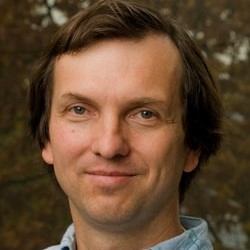
A man with short brown hair and blue eyes smiles slightly at the camera. He is wearing a light blue collared shirt, with a blurred outdoor background featuring trees.
Tomas Vaisar, PhD
Research Professor of Medicine, Division of Metabolism, Endocrinology and Nutrition, Director, Proteomics and Bioinformatics Core, Diabetes Research Center
A gray silhouette of a person on a light gray background, commonly used as a placeholder profile image or avatar. No facial features or distinguishing characteristics are visible.
Ilona Babenko
Research Scientist
A gray silhouette of a person on a light gray background, commonly used as a placeholder profile image or avatar. No facial features or distinguishing characteristics are visible.
Aaron Boyce
Research Scientist
A gray silhouette of a person on a light gray background, commonly used as a placeholder profile image or avatar. No facial features or distinguishing characteristics are visible.
Carissa Thornock
Research Scientist
A gray silhouette of a person on a light gray background, commonly used as a placeholder profile image or avatar. No facial features or distinguishing characteristics are visible.
Jake Wimberger
Research Scientist
Contact Us

South Lake Union

850 Republican Street, N211

Seattle, WA 98109
Lab Phone: 206-616-4524

To inquire about Postdoctoral and Graduate Student Openings:

Email – tvaisar@uw.edu