

Brain, Body and Appetite Research Collaborative (Schur Laboratory)
The Schur laboratory seeks to understand how the brain regulates appetite. In humans, social, psychological, physiologic, and other factors influence appetite and food intake.

In BBARC studies, study participants often view images of food, such as those above, while undergoing an MRI scan to study the perception of appetite.
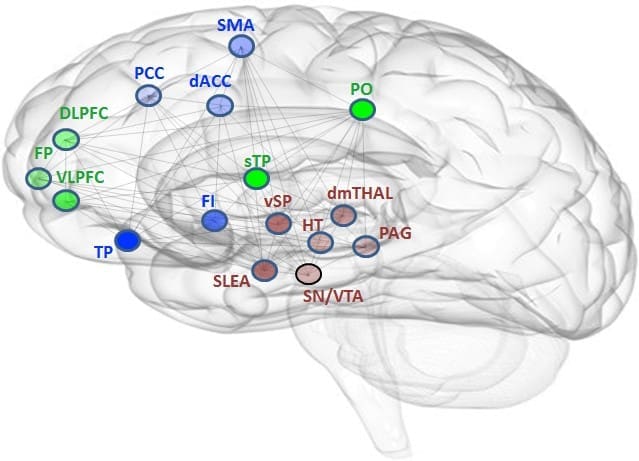
The Brain, Body and Appetite Research Collaborative (BBARC) is dedicated to improving the health and well-being of people living with obesity and related conditions through attaining a better understanding of the brain’s role in the development and treatment of these important health concerns. Appetite is regulated by the brain. This complicated regulation system uses some of the brain’s most powerful motivational signals to ensure we maintain sufficient energy stores for survival. These signals become even stronger when people try to lose weight, fighting back against the weight loss to rebuild energy stores in the form of fat. The function of this appetite-regulating system is influenced by genetic, environmental, behavioral, social, and physiologic factors. We therefore use multi-disciplinary research approaches that integrate fields including endocrinology, psychology, and neuroscience. Finally, we seek to be allies to people living with obesity; we strive to combat weight stigma in our personal interactions and by disseminating scientific knowledge regarding the biology of appetite and weight regulation.

In BBARC studies, study participants often view images of food, such as those above, while undergoing an MRI scan to study the perception of appetite.





Current Studies
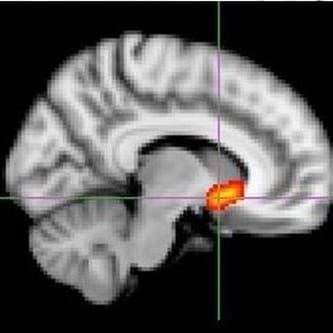
Our functional MRI studies evaluate the influence of genetics, body weight, and weight loss on the brain’s response to images of high- and low-calorie food to reach a better understanding of how the brain shapes appetite. Our current structural MRI studies evaluate hypothalamic inflammation—or gliosis—in both adults and children. Gliosis, in its most serious manifestation, is a form of scarring. It results from highly energetic diets in rodents, and the BBARC lab is assessing whether this is also true in people. We are also actively investigating how hypothalamic gliosis might influence the risk of developing obesity or type 2 diabetes mellitus.
Weight Effects on Brain health Study (WEBS)
Brain Appetite and Satiety in Children-2 (BASIC2)
Brain Effects on Appetite and Metabolism Study (BEAM)
What You Eat affect your Brain (WYE)
Assessing Diet, Appetite and Physiology Throughout weight loss (ADAPT)
Food Image Study (FIS)
Brain Influences on growth at Birth Study (BIBS)
Brain Influences on growth at Birth Study 2 (BIBS2)
Building Research and Intervention Development to Guide Eating Habits in children Study (BRIDGE)
Inherited and Environmental Risks Acting on body weight study (INTERACT)
The Weight Effects on Brain health Study (WEBS) seeks to understand the possible implications of hypothalamic inflammation on clinical weight management for humans undergoing obesity treatment

The Brain Appetite and Satiety in Children-2 (BASIC2) study is performed in collaboration with Seattle Children’s and seeks to understand if the addition of a glucagon-like peptide-1 receptor agonist in combination with family-based behavioral treatment augments children’s weight loss through improved brain responses to a meal and/or reduced hypothalamic inflammation.

The Brain Effects on Appetite and Metabolism Study (BEAM) investigates if the presence of hypothalamic inflammation contributes to reduced satiety responsiveness and/or poor food intake regulation and if it is a risk factor of excessive weight gain. This is a 2-site study with participants at the University of Washington and Johns Hopkins University.

The does What You Eat affect your Brain (WYE) study seeks to understand the effect of diet in humans on hypothalamic inflammation.
The implication of hypothalamic inflammation for cardiovascular disease study extends our current projects by investigating the relationship of hypothalamic inflammation and cardiovascular disease risk in humans in an ancillary study to the Framingham Heart Study.
The Assessing Diet, Appetite and Physiology Throughout weight loss (ADAPT) study investigates if there are changes in metabolism and/or the brain that contribute to the occurrence of an involuntary weight loss plateau. This study is performed in collaboration with investigators at the Fred Hutch Cancer Center and the VA (VAPSHCS).
Currently recruiting adults age 18-60, click here for more information: ADAPT study
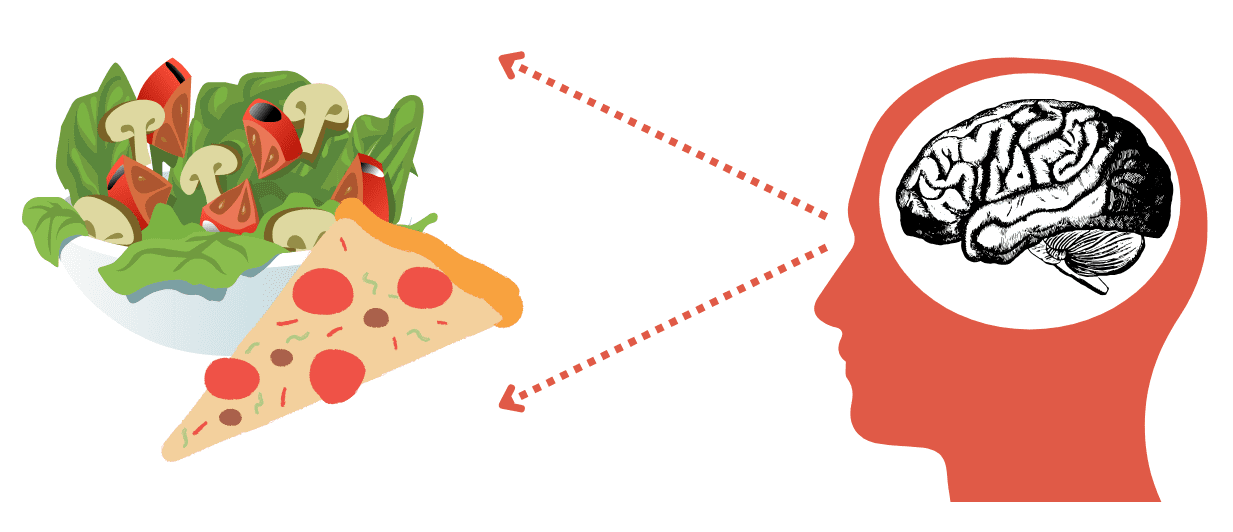
The Food Image Study (FIS) investigates how the brain responds to different types of visual food stimuli in adults.
The Brain Influences on growth at Birth Study (BIBS) investigates how a baby’s brain characteristics contribute to growth and weight gain in the first 6 months of life. This study is directed by Dr. Sewaybricker.
The Brain Influences on growth at Birth Study 2 (BIBS2) is trying to learn how the baby brain and nutrition contribute to weight gain and growth early in life in babies of mothers who experienced gestational diabetes.. This study is directed by Dr. Sewaybricker.
Currently recruiting infants between 1-4 weeks old, diagnosed with gestational diabetes during pregnancy. If you are currently pregnant or have an infant 1-4 weeks old, click here for more information Brain Influences on growth at Birth Study 2 (BIBS2)
The Building Research and Intervention Development to Guide Eating Habits in children Study (BRIDGE) seeks to engage families in research involving feeding studies in children and if changing a child’s diet can lead to measurable brain changes.
The Inherited and Environmental Risks Acting on body weight study (INTERACT) investigates how inherited and environmental factors contribute to the pathogenesis of obesity through mechanisms in body-weight regulating areas of the brain.
Members of the Brain, Body and Appetite Research Collaborative

Ellen Schur, MD, MS
Professor of Medicine, Division of General Internal Medicine, Director, Nutrition and Obesity Research Center

Susan Melhorn, PhD
Senior Research Scientist

Leticia Sewaybricker, MD, PhD
Research Assistant Professor, General Internal Medicine

Dabin Yeum, PhD
Postdoctoral Fellow

Mary Webb
Research Coordinator

Roz De Leon
Research Coordinator

Miriam Rodriguez Ruiz
Research Study Coordinator

Lauren Hand, PhD. RD
Postdoctoral Fellow

Josephine Stenn
Research Coordinator

Emma Saroiu
Undergraduate Student
Lab Alumni

Suchi Chandrasekaran, MD, MSCE

Jennifer Rosenbaum, MD, MEd

Kelsey Olerich, MD, PhD

Caila Tongco

Sara Pirouz

Sarah Kee

Melbin Thomas, MD

Olivia Carter

Alyssa Huang, MD

Justin Lo
Brain, Body and Appetite Research Collaborative Featured Publications
Update on Hypothalamic Inflammation and Gliosis: Expanding Evidence of Relevance Beyond Obesity. Huang A, Yeum D, Sewaybricker LE, Aleksic S, Thomas M, Melhorn SJ, Earley YF, Schur EA. Curr Obes Rep. 2025 Jan 8;14(1):6. doi: 10.1007/s13679-024-00595-8. PMID: 39775194.
Hypothalamic Gliosis Is Associated With Multiple Cardiovascular Disease Risk Factors in the Framingham Heart Study. Lo J, Melhorn SJ, Kee S, Olerich KLW, Huang A, Yeum D, Beiser A, Seshadri S, DeCarli C, Schur EA. J Am Heart Assoc. 2025 May 20;14(10):e039463. doi: 10.1161/JAHA.124.039463. Epub 2025 Apr 16. PMID: 40240914; PMCID: PMC12184564.
Associations of radiologic characteristics of the neonatal hypothalamus with early life adiposity gain. Sewaybricker LE, Melhorn SJ, Entringer S, Buss C, Wadhwa PD, Schur EA, Rasmussen JM. Pediatr Obes. 2024 Jun;19(6):e13114. doi: 10.1111/ijpo.13114. Epub 2024 Mar 13. PMID: 38477234; PMCID: PMC11081834.
The Impact of Eating Behaviors on Ultraprocessed Food Consumption Over 12 Months in Children. Yeum D, Hua S, Thapaliya G, Duck SA, Melhorn SJ, Roth CL, Schur EA, Carnell S, Sewaybricker LE. Obesity (Silver Spring). 2025 Sep;33(9):1704-1712. doi: 10.1002/oby.24361. Epub 2025 Jul 27. PMID: 40716791; PMCID: PMC12313174. *Selected as Editor’s Choice.
The significance of hypothalamic inflammation and gliosis for the pathogenesis of obesity in humans. Leticia E Sewaybricker, Alyssa Huang, Suchitra Chandrasekaran, Susan J Melhorn, Ellen A Schur. Endocr Rev. 2022 Oct 17:bnac023. doi: 10.1210/endrev/bnac023. Epub ahead of print. PMID: 36251886.
Exposure to Gestational Diabetes Mellitus Prior to 26 Weeks is Related to The Presence of Mediobasal Hypothalamic Gliosis in Children. Chandrasekaran S, Melhorn S, Olerich KL, Angelo B, Chow T, Xiang A, Schur EA, Page KA. Diabetes. 2022 Sep 12:db220448. doi: 10.2337/db22-0448. Epub ahead of print. PMID: 36095276.
Impaired Brain Satiety Responses After Weight Loss in Children with Obesity. Roth CL, Melhorn SJ, De Leon MRB, Rowland MG, Elfers CT, Huang A, Saelens BE, Schur EA J Clin Endocrinol Metab. 2022 Jul 14;107(8):2254-2266. doi: 10.1210/clinem/dgac299. PMID: 35544121; PMCID: PMC9282278.
Evidence That Hypothalamic Gliosis Is Related to Impaired Glucose Homeostasis in Adults with Obesity. Rosenbaum JL, Melhorn SJ, Schoen S, Webb MF, De Leon MRB, Humphreys M, Utzschneider KM, Schur EA. Diabetes Care. 2022 Feb 1;45(2):416-424. doi: 10.2337/dc21-1535. PMID: 34848489; PMCID: PMC8914420.
Greater radiologic evidence of hypothalamic gliosis predicts adiposity gain in children at risk for obesity. Sewaybricker LE, Kee S, Melhorn SJ, Schur EA. Obesity (Silver Spring). 2021 Nov;29(11):1770-1779. doi: 10.1002/oby.23286. PMID: 34734493; PMCID: PMC8608399.
Initial evidence for hypothalamic gliosis in children with obesity by quantitative T2 MRI and implications for blood oxygen-level dependent response to glucose ingestion. Sewaybricker LE, Schur EA, Melhorn SJ, Campos BM, Askren MK, Nogueira GAS, Zambon MP, Antonio MARGM, Cendes F, Velloso LA, Guerra-Junior G. Pediatr Obes. 2019 Feb;14(2):e12486. doi: 10.1111/ijpo.12486. Epub 2018 Dec 10. PMID: 30537237; PMCID: PMC7027952.
Brain regulation of appetite in twins. Melhorn SJ, Mehta S, Kratz M, Tyagi V, Webb MF, Noonan CJ, Buchwald DS, Goldberg J, Maravilla KR, Grabowski TJ, Schur EA. Am J Clin Nutr. 2016 Feb;103(2):314-22. doi: 10.3945/ajcn.115.121095. Epub 2016 Jan 6. PMID: 26739033; PMCID: PMC4733261.
Radiologic evidence that hypothalamic gliosis is associated with obesity and insulin resistance in humans. Schur EA, Melhorn SJ, Oh SK, Lacy JM, Berkseth KE, Guyenet SJ, Sonnen JA, Tyagi V, De Leon MRB, Webb MF, Gonsalves ZT, Fligner CL, Schwartz MW, Maravilla KR. Obesity (Silver Spring). 2015 Nov;23(11):2142-8. doi: 10.1002/oby.21248. Erratum in: Obesity (Silver Spring). 2022 Jul;30(7):1520. PMID: 26530930; PMCID: PMC4634110.
Obesity is associated with hypothalamic injury in rodents and humans. Thaler JP, Yi CX, Schur EA, Guyenet SJ, Hwang BH, Dietrich MO, Zhao X, Sarruf DA, Izgur V, Maravilla KR, Nguyen HT, Fischer JD, Matsen ME, Wisse BE, Morton GJ, Horvath TL, Baskin DG, Tschöp MH, Schwartz MW. J Clin Invest. 2012 Jan;122(1):153-62. doi: 10.1172/JCI59660. Epub 2011 Dec 27. Erratum in: J Clin Invest. 2012 Feb 1;122(2):778. PMID: 22201683; PMCID: PMC3248304.
BBARC Awards
- Leticia Sewaybricker, MD, PhD, Assistant Professor, 2025 UWMDI Catalyst Award Recipient
- Mary Webb, Research Coordinator, 2024 UW Department of Medicine’s Outstanding Staff Award Recipient
- Justin Lo, Medical Student, 2024-2025 Magnuson Scholar, School of Medicine Award Recipient
- Susan Melhorn, PhD, Senior Research Scientist, 2023 UW Department of Medicine’s Inaugural Outstanding Staff Award Recipient
- Dr. Ellen Schur: 2025 William J. Bremner Endowed Mentorship Award
Contact Us
UW Medicine Diabetes Institute
750 Republican Street, Box 358062
Seattle, WA 98109
Ellen Schur: (206) 543-8433
Susan Melhorn: (206) 616-3984
Ellen Schur: ellschur@uw.edu
Susan Melhorn: smelhorn@uw.edu
To inquire about Postdoctoral and Graduate Student Openings click on: ellschur@uw.edu